building a data computer room in germany must not only meet technical needs, but also comply with local regulations and international standards. this article explains the key points one by one, from site selection, architectural design, power supply and cooling, network interconnection, security monitoring to disaster recovery planning, to help project teams find a balance between compliance and performance.
the construction of computer rooms should comply with relevant german and eu regulations, including construction, fire protection, energy efficiency and information security. common reference standards include the din series, bsi guidelines, and iso/iec information security management specifications. in addition, the data protection requirements of gdpr need to be taken into account, and compliance assessment and audit plans should be included from the beginning of the project.
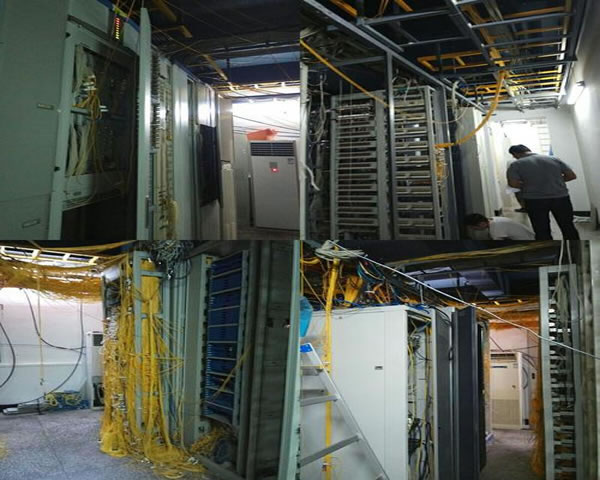
site selection requires a multi-dimensional risk assessment such as floods, earthquakes, industrial risks, and power stability, while also considering the distance from major internet exchange points and transmission trunk lines. prioritize locations with accessible power and fiber redundancy, and evaluate operating costs, taxes and local planning restrictions to ensure long-term availability and low-latency interconnection.
building design needs to take into account physical security and maintenance convenience, including fire zoning, fire resistance ratings, controlled access, load-bearing floors and machine room layout. the computer room should have a clear separation between the equipment area and the operating area, appropriate moisture-proof and dust-proof measures, and an infrastructure design that facilitates cooling and wiring to meet long-term expansion needs.
a robust power supply system is the core of the reliability of the computer room. it usually uses a combination of dual mains input, ups and diesel generators, and designs n+1 or 2n redundancy as required. power distribution, grounding, switching devices and fuel protection schemes need to be consistent with local regulations, with monitoring and regular testing procedures in place to verify availability.
cooling options should be selected based on equipment density and energy efficiency goals, such as inter-row cooling, in-rack cooling, or hot/cold aisle rectification. germany emphasizes energy conservation and waste heat recovery. free cooling sources, variable frequency control and heat recovery systems can be used to reduce pue and meet local energy efficiency regulations and environmental protection requirements.
network design needs to ensure transmission redundancy and diversified paths, and support multi-operator access and cross-connections. proximity to internet exchange points and carrier clusters such as frankfurt reduces latency and costs. at the same time, plan network segmentation and ddos protection, and combine physical isolation and logical partitioning to improve availability and security.
physical security adopts hierarchical access control, 24/7 video surveillance, intrusion detection and personnel background checks; information security requires cooperation with bms, log management and compliance auditing. integrate physical and network monitoring systems, establish alarm response and emergency procedures, and conduct regular drills to ensure that incidents can be quickly located and handled.
disaster recovery design includes multi-site backup, off-site real-time or near-real-time replication, and clear rto/rpo goals and recovery processes. it is recommended to adopt a geographically dispersed multi-active or cold/hot standby strategy, and conduct regular recovery drills and capacity verification to ensure that services can be restored as expected in the event of unexpected power outages, link interruptions or natural disasters.
building a data computer room in germany requires comprehensive planning from site selection, compliance, infrastructure to disaster recovery, prioritizing risk and needs assessment and citing din/bsi/iso and other standards. it is recommended to communicate with local regulatory and operating partners early, adopt a modular scalable design, and take energy efficiency and maintainability as long-term goals to achieve reliable and compliant computer room operations.
- Latest articles
- Case Sharing: The Improvement Of Operation And Maintenance Efficiency Brought By Thailand IDC Computer Room Hosting
- Evaluation Report: Is Vultr A Japanese Native IP? Performance Comparison With Other Providers
- How To Judge Whether Thailand Vps Can Meet The Stability Of High Concurrent Access After Purchase
- Industry Standards Interpretation Of Standards And Compliance Requirements Related To Network Cable Routing In German Computer Rooms
- How To Judge Bandwidth Stability And Delay Through Hong Kong Line Equipment Room Prices
- The Transparent Replacement Process And Cost Suggestions Help You Reasonably Estimate How Much It Will Cost To Replace A Server In Thailand.
- Stability Improvement: Hardware And Network Optimization Methods When Taiwan’s Native IP Is Often Disconnected
- How Small And Medium-sized Enterprises Can Use Vietnam Vps Cn2 To Reduce Overseas Operation And Maintenance Costs
- A Must-read For Technicians: Renting A Server In Cambodia: Essentials Of Network Configuration And Monitoring
- How Can Enterprises Choose The Cheapest Malaysian Vps To Achieve High Availability Within The Budget?
- Popular tags
-

Evaluate The Quality And Reliability Of German Server Services
In-depth evaluation of the quality and reliability of German server services and help users choose the right server solution. -

Exploring Germany’s Server Names And Market Positioning
this article discusses german server names and market positioning, and analyzes its importance and development trends in global network services. -

Analyzing Real User Feedback On The Stability And User Experience Of German-made Server Brands
Based on real user feedback, this analysis evaluates the performance of German-made server brands in terms of stability, hardware quality, energy consumption, deployment and maintenance, as well as after-sales service. Practical recommendations are provided for both purchasing decisions and operational management.